
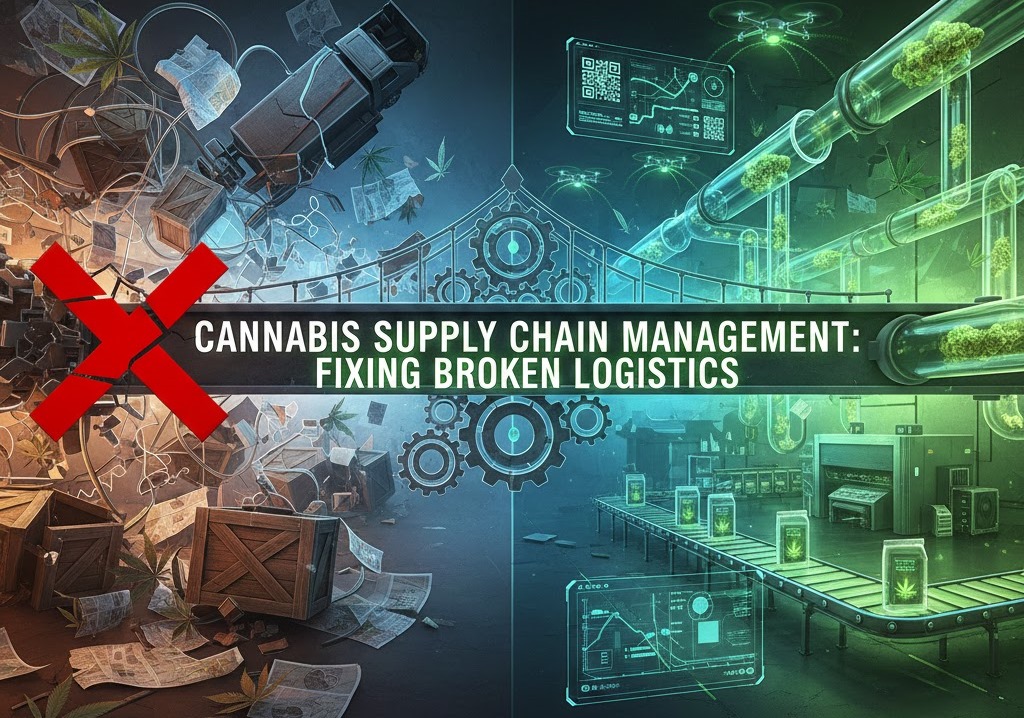
Supply chain management in most industries involves well-established processes refined over decades. You source materials, manufacture products, distribute to retailers, and track inventory using proven methodologies.
Then there’s cannabis.
The legal cannabis supply chain operates under constraints that break every assumption underlying traditional logistics. You can’t ship across state lines. You can’t use standard banking infrastructure. You must track every gram from cultivation through sale.
The Unique Cannabis Supply Chain Challenges
State containment requirements mean cannabis products cultivated in California cannot legally cross into Nevada. This forces entirely localized supply chains in each state, preventing the economies of scale that national distribution networks provide.
Seed-to-sale tracking mandates require monitoring every plant with unique identifiers from cultivation through final retail sale, generating enormous data volumes that must integrate with state regulatory systems in real-time.
License verification obligations mean businesses can only transact with other licensed operators. Every wholesale transaction requires confirming trading partners maintain active, valid licenses.
Testing requirements mandate laboratory analysis before sale. Certificates of Analysis must accompany products through the supply chain.
Banking restrictions from federal prohibition mean standard payment processing doesn’t work.
Transportation regulations limit who can move cannabis products, which routes they can take, and what documentation must accompany shipments.
A simple transfer from cultivator to processor to dispensary involves more regulatory touchpoints than distributing conventional products nationally.
Why Traditional Supply Chain Software Fails
Generic supply chain management platforms weren’t architected for cannabis’s regulatory environment. Platforms like SAP, Oracle, or Manhattan Associates excel at conventional logistics but can’t handle cannabis-specific requirements without extensive customization.
Standard inventory systems don’t integrate with Metrc or other state tracking platforms. They weren’t designed to tag individual packages or sync inventory movements with government databases in real-time.
Traditional logistics platforms assume interstate commerce as baseline capability. For cannabis, supply chains must operate entirely within state borders.
Conventional systems weren’t built for the granular tracking cannabis requires. While traditional supply chains track shipments at SKU levels, cannabis demands package-level tracking with complete chain of custody documentation.
Cannabis Supply Chain Management Platform Requirements
Purpose-built platforms design around regulatory requirements from the start.
Real-time regulatory integration connects supply chain operations directly with state tracking systems, automatically updating regulatory databases.
Multi-party coordination tools recognize that cannabis supply chains involve multiple licensed entities coordinating complex handoffs.
Compliance-embedded workflows build regulatory requirements directly into standard operating procedures, preventing non-compliant actions.
License verification systems automatically confirm trading partners maintain active licenses before permitting transactions.
Batch and lot tracking provides the granular traceability cannabis regulations demand.
Demand forecasting tools help operators predict inventory needs despite state containment constraints.
Also Read: Why Internal Search is Important for Marketing Websites: How to Improve Your Results
The Integrated Supply Chain Model
Modern platforms integrate marketplace functionality with supply chain coordination, streamlining workflows across the entire wholesale supply chain.
When dispensaries browse products and place orders, those transactions initiate supply chain workflows. Order details automatically flow into the supplier’s fulfillment systems.
The platform provides visibility across the entire supply chain transaction. Dispensary buyers can track order status from placement through delivery. Suppliers can see buyer order history, predict demand patterns, and optimize inventory.
Integrated communication keeps all supply chain coordination in one place. Questions about specifications, delivery timing, or documentation get resolved through platform messaging that maintains complete conversation histories.
The compliance infrastructure means supply chain documentation generates automatically. Transfer manifests populate with correct information. Supply chain compliance becomes a background process.
Optimizing Cannabis Supply Chains
Effective cannabis supply chain management extends beyond regulatory compliance to operational optimization. The best platforms provide analytics that reveal inefficiencies, demand patterns, and inventory optimization opportunities.
Inventory velocity analysis shows which products move quickly versus slowly.
Buyer behavior insights reveal purchasing patterns enabling better demand forecasting.
Fulfillment metrics track how quickly orders process, identifying bottlenecks.
Geographic demand mapping helps suppliers understand where strong demand exists.
Seasonal trend analysis reveals how demand fluctuates throughout the year.
Multi-Facility Supply Chain Coordination
For operators managing multiple cultivation, processing, or distribution facilities, supply chain coordination becomes exponentially more complex.
Effective multi-facility management requires centralized visibility with distributed execution. Corporate teams need comprehensive views of inventory across all locations. Individual facility managers need detailed operational control.
Cannabis supply chain platforms that support multi-facility operations provide hierarchical permissions and aggregated reporting. Orders can route to appropriate fulfillment locations based on inventory availability, geographic proximity, or strategic priorities.
Risk Management in Cannabis Supply Chains
Cannabis supply chain management must account for risks that don’t affect traditional industries.
Supplier diversification helps mitigate risks from individual supplier issues.
Quality tracking systems maintain histories of product quality, testing results, and customer feedback.
Regulatory monitoring helps operators anticipate and adapt to changing compliance requirements.
Business continuity planning becomes easier with supply chain data showing critical dependencies and alternative sourcing options.
The Future of Cannabis Supply Chain Management
Several technological and regulatory developments will reshape cannabis supply chains:
Interstate commerce when federal legalization occurs will fundamentally transform supply chain economics.
Blockchain tracking offers potential for immutable supply chain records.
IoT sensor integration will enable real-time monitoring of cultivation environments and transportation parameters.
AI-driven optimization could automatically suggest inventory adjustments and predict demand fluctuations.
Making the Platform Decision
Cannabis operators evaluating supply chain management platforms should consider: Does the platform integrate with your state’s tracking systems? Does it support the license types you work with? Does it provide visibility across your entire supply chain?
Most importantly: Does the platform reduce supply chain complexity while improving compliance and operational efficiency?
Purpose-built cannabis supply chain management solutions demonstrate that specialized platforms designed for cannabis-specific requirements deliver both compliance and efficiency while reducing regulatory risk, streamlining operations, and improving business outcomes.
Operators who establish robust supply chain management infrastructure now position themselves to handle tomorrow’s challenges while competitors struggle with yesterday’s tools.
For cannabis businesses serious about supply chain excellence, purpose-built platforms designed specifically for cannabis offer the best path forward. Specialized platforms provide the integrated functionality, regulatory compliance, and operational efficiency that cannabis supply chain management demands.